

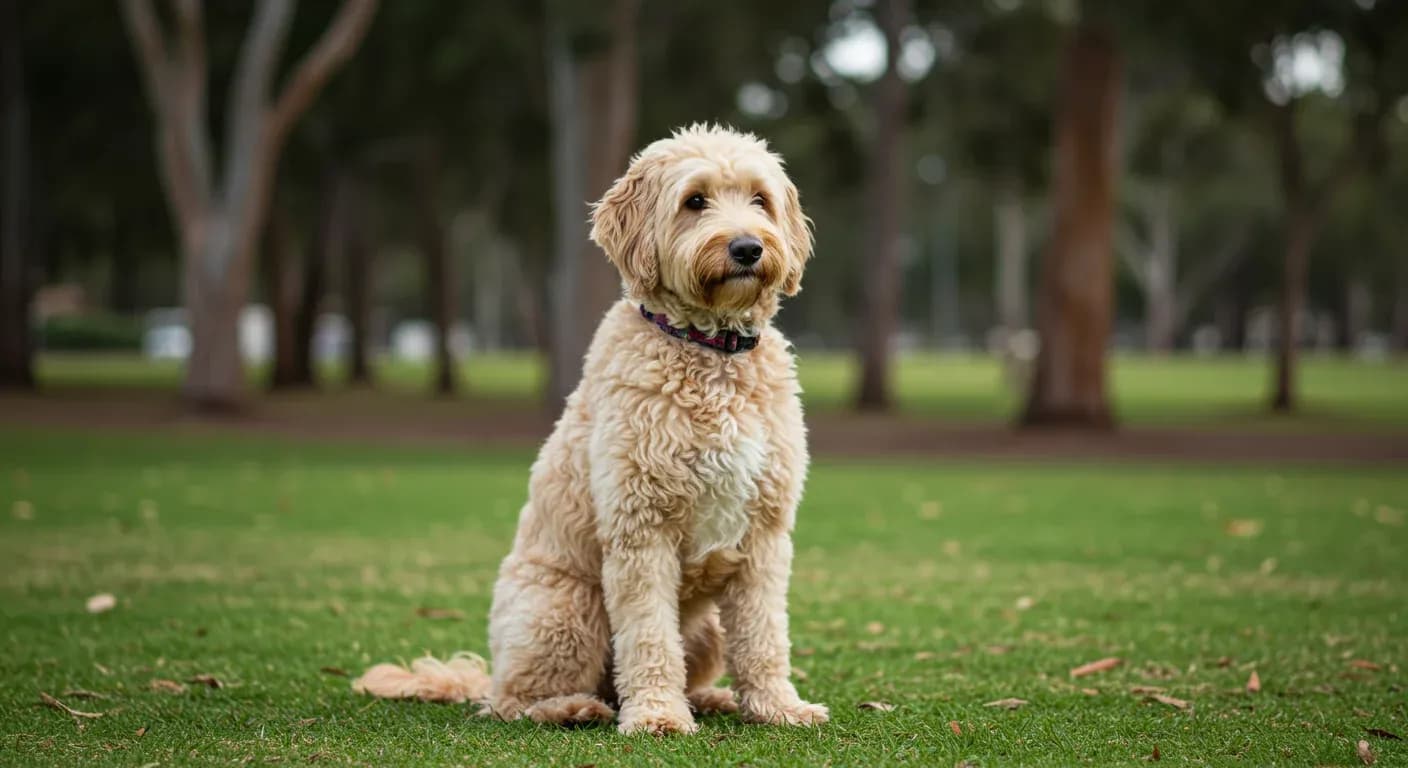
Many Goldendoodle owners worry when their typically friendly dog starts showing aggressive behaviours. You might notice your dog becoming reactive around other dogs at the park, or perhaps they're showing defensive behaviours that seem completely out of character. Understanding why this happens, and more importantly, how to address it, can help restore harmony to your household.
While aggression in Goldendoodles isn't common given their social nature, research shows these dogs actually display higher rates of dog-directed aggression and fear compared to their Golden Retriever and Poodle parents. This doesn't mean your dog is inherently aggressive, rather that they may be more likely to react defensively when feeling threatened or anxious around unfamiliar dogs.
At a glance
- Goldendoodles show higher dog-directed aggression and fear than their parent breeds, but rarely display aggression toward people
- Most aggressive behaviours stem from fear, anxiety, or inadequate socialisation rather than dominance
- Early intervention through positive training typically shows improvement within 4 to 8 weeks
- Professional help should be sought if aggression persists or escalates, especially for safety concerns
Understanding why your Goldendoodle shows aggression
When it comes to aggression in these dogs, context matters enormously. Research indicates that Goldendoodles tend to be more reactive toward unfamiliar dogs, often stemming from fear rather than true dominance. This dog-directed fear can manifest as barking, lunging, or snapping when your dog feels cornered or threatened by another dog's approach.
The reasons behind this behaviour often trace back to several key factors. Genetics play a role, as some dogs may inherit anxious or overly protective traits despite being bred for friendliness. Early life experiences matter tremendously too. Puppies that missed critical socialisation windows or experienced trauma during their first few months often develop fear-based responses that can escalate to aggression.
Health issues shouldn't be overlooked either. If your previously calm dog suddenly becomes aggressive, pain or discomfort might be the culprit. A thorough veterinary examination can rule out underlying medical causes that might be triggering defensive behaviours.
Types of aggression you might observe

Dog-directed aggression appears most commonly in these dogs. You'll typically see this as threatening postures, barking, or aggressive responses when encountering unfamiliar dogs during walks or at dog parks. This behaviour often links directly to fear or protective instincts rather than true territorial dominance.
Owner-directed aggression occurs less frequently in Goldendoodles than in Golden Retrievers, but it can develop when dogs feel challenged or threatened by household members. This might manifest during resource guarding situations or when dogs feel their space is being invaded.
Stranger-directed fear represents another concern. While Goldendoodles are typically friendly with people, some individuals show more wariness toward strangers than their Golden Retriever parents. This fear can sometimes escalate to defensive aggression if not properly managed through gradual exposure and positive experiences.
Immediate steps for managing aggressive behaviour
Safety comes first in any aggressive situation. If your dog shows signs of escalating aggression, remove them from the triggering situation calmly and without punishment. Yelling or physical corrections often worsen fear-based aggression and can damage your relationship with your dog.
Start identifying specific triggers that cause aggressive responses. Does your dog react to certain types of dogs? Specific situations like doorbell ringing? Particular locations or times of day? Understanding these patterns helps you manage the environment while working on training solutions.
Implement management strategies immediately. This might mean crossing the street when you see approaching dogs, using baby gates to create safe spaces in your home, or temporarily avoiding dog parks until you've addressed the underlying issues. Management isn't a permanent solution, but it prevents rehearsal of aggressive behaviours while you work on training.
Training approaches that work

Positive reinforcement training forms the foundation of successful aggression modification. Reward calm, non-aggressive behaviours consistently with high-value treats, praise, and play. Most Goldendoodles respond excellently to this approach due to their intelligence and eagerness to please.
Focus on teaching essential commands like "leave it," "sit," and "stay" to help manage reactive behaviours. Practice these commands in low-stress situations first, gradually increasing difficulty as your dog becomes more reliable. Short, frequent training sessions work better than long, intensive ones. Most dogs show better progress with two or three five-minute sessions daily rather than one extended training period.
Desensitisation and counter-conditioning techniques can help reduce fear responses over time. This involves gradually exposing your dog to their triggers at a distance where they remain calm, then rewarding positive responses. Slowly decrease the distance as your dog becomes more comfortable. This process requires patience, as rushing can set back progress significantly.
The importance of proper socialisation
Early socialisation remains crucial for preventing aggression, though it's never too late to start. If you have a puppy, expose them to various people, dogs, environments, and situations before 16 weeks of age. Use controlled, positive experiences to build confidence and reduce the likelihood of fear-based aggression developing.
For adult dogs showing aggressive tendencies, careful re-socialisation can help. This process moves more slowly than puppy socialisation and often requires professional guidance. The goal isn't to overwhelm your dog with experiences, but to gradually build positive associations with previously triggering situations.
Controlled socialisation might involve parallel walks with calm dogs, supervised interactions with well-behaved canine friends, or structured training classes designed for reactive dogs. Each positive experience helps rebuild your dog's confidence and reduces their need to respond aggressively.
Tools and products that can help
Several tools can assist in managing aggressive behaviours safely. Head halters like the Gentle Leader or no-pull harnesses such as the Easy Walk Harness provide better control during walks and can prevent your dog from lunging toward triggers. These tools redirect pulling force and give you more control without causing discomfort.
Calming aids may help reduce anxiety-related aggression. Adaptil diffusers release dog-appeasing pheromones that can create a more relaxed environment. Supplements like Zylkene may also help anxious dogs feel calmer, though these should be discussed with your veterinarian first.
Interactive toys and puzzle feeders serve dual purposes. They provide mental stimulation that can reduce boredom and frustration, both of which can contribute to aggressive behaviours. They also help create positive associations and can be used as high-value rewards during training sessions.
When to seek professional help
Professional intervention becomes necessary when aggression persists despite consistent training efforts, escalates in intensity, or poses safety risks to people or other animals. Look for certified professional dog trainers or veterinary behaviourists with experience working with intelligent, sensitive breeds.
Don't wait if the aggression involves biting, even minor incidents. Early intervention yields the best outcomes and prevents behaviours from becoming deeply ingrained. A qualified professional can assess your specific situation and develop a customised training plan that addresses your dog's particular triggers and responses.
With consistent training and proper management, most owners see noticeable improvements within 4 to 8 weeks. However, dogs with strong fear or anxiety components may require longer-term management. For comprehensive guidance on addressing various behavioural challenges beyond aggression, consider exploring solving Goldendoodle behaviour problems which covers additional training methods for common issues. The key lies in understanding that aggression in these typically friendly dogs usually stems from fear rather than dominance, making patience and positive approaches your most effective tools for creating lasting change.


